How to Double a Small Closet Without Renovating
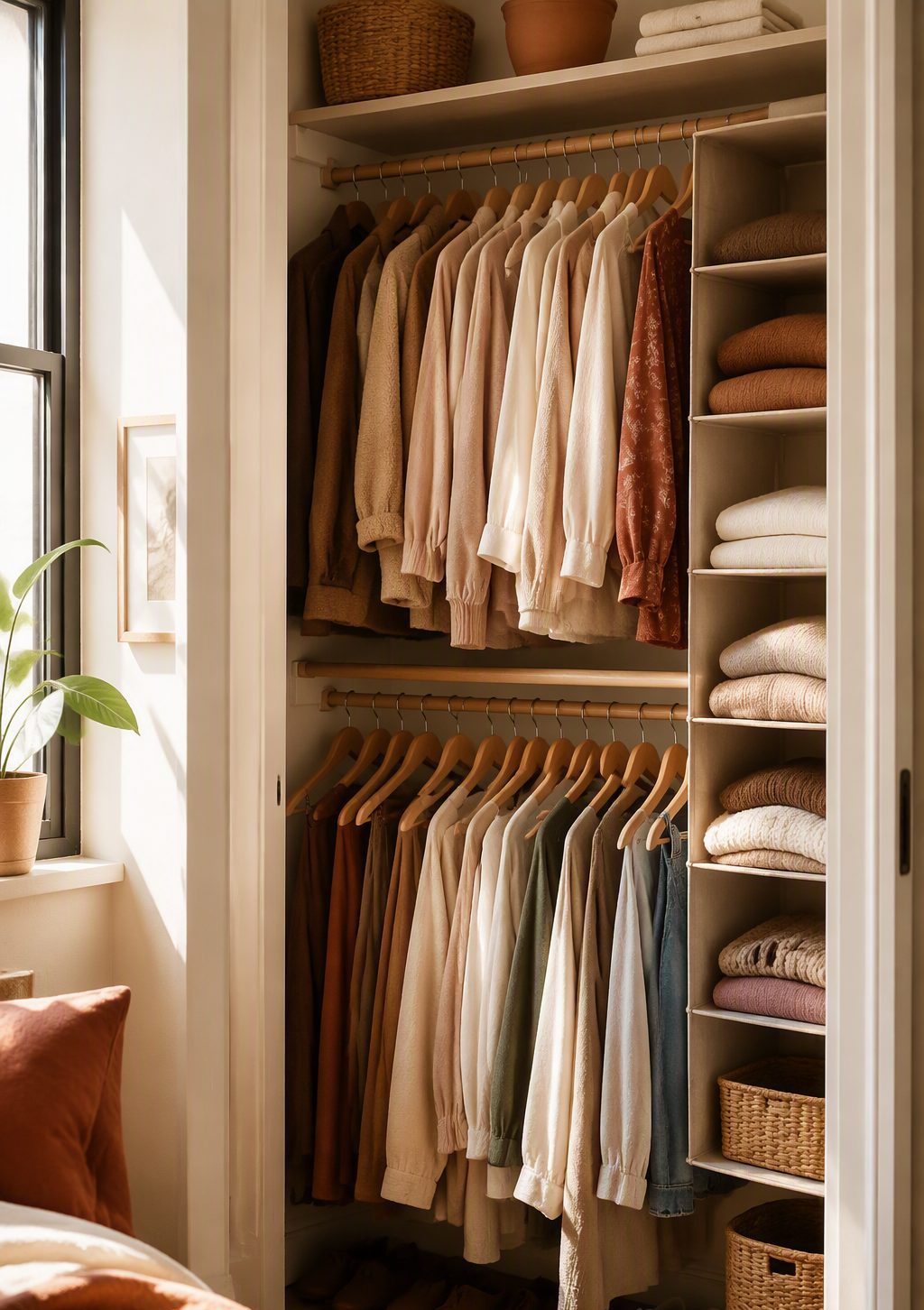
Most small closets use about half their actual volume. Here's how to claim the other half — no tools harder than a tape measure, nothing a landlord can object to.
Closet systems cost hundreds and assume you own the place. Small closets in rentals need a different playbook: work the vertical, exploit the door, and stop wasting the floor. Five moves, in order of impact.
1. Swap the hangers (the 15-minute win)
Standard plastic hangers are about half an inch thick; slim velvet ones are about a fifth of an inch. Across a full closet that's a foot of reclaimed rail — the single highest-impact, lowest-cost change you can make. We compared the ones that actually hold up in our hanger roundup.
2. Double the rail
Most closets have one rail at eye level and dead air below it. A closet doubler (a second rail that hangs from the first) adds a lower rod for shirts and folded-over pants — no tools, no holes, instantly doubles hanging space for anything that isn't a dress.
3. Hang shelves off the rail
Hanging fabric shelves hook over the rail and give you 4–6 compartments for sweaters, jeans, and bags — the stuff that never belonged on hangers anyway. They cost little, install in seconds, and move with you. Just respect the weight limit: sweaters yes, dumbbell collection no.
4. Take the door
An over-door rack or set of hooks turns the door into storage for shoes, bags, belts, or tomorrow's outfit. It's the most ignored surface in the room and requires zero commitment — it lifts off when you move.
5. Fix the floor last
Closet floors become shoe landslides because shoes have no assigned home. A slim two-tier shoe rack or a couple of labeled bins (one for shoes, one for seasonal) contains it. Skip the 24-pocket hanging shoe organizer unless you enjoy things falling on your head at 7 a.m.
One honesty note: doubling a closet is about fitting your wardrobe better, not fitting more wardrobe. If the closet's full after all five moves, the sixth step is a donation bag.