The Renter's Guide to No-Drill Kitchen Storage
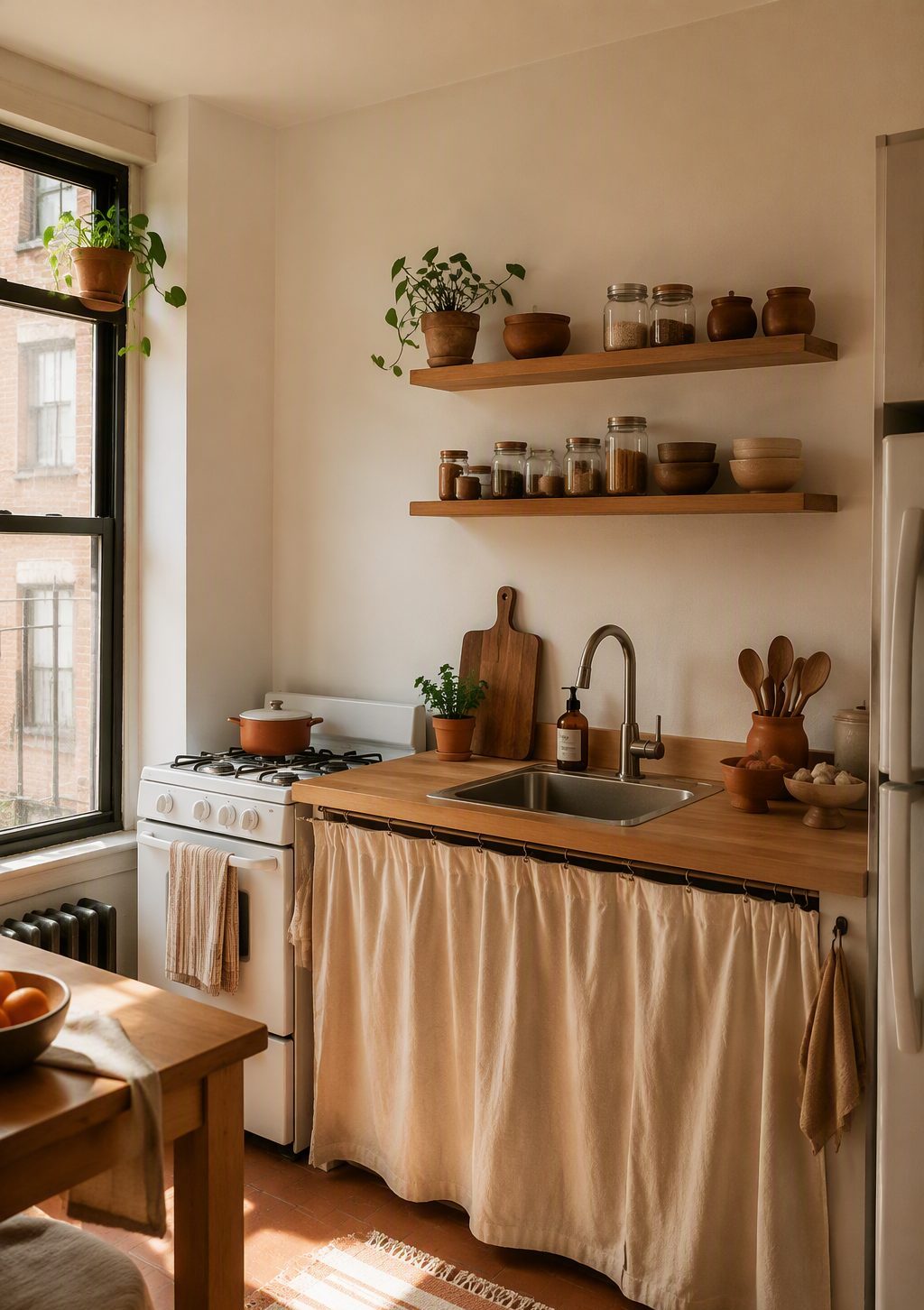
Your lease says no holes. Your kitchen says no space. Here's every storage method that respects both, organized by how it actually works, so you can judge what'll hold up in your kitchen.
Most renter storage advice is a shopping list. This isn't. No-drill storage works through four mechanisms: adhesive, tension, magnets, and gravity (freestanding). Each one has surfaces it loves and surfaces where it fails at 3 a.m. with a crash. Understand the mechanism and you'll never buy a doomed product again.
1. Adhesive: better than it used to be, still not magic
Modern adhesive shelves and hooks use gel-pad or acrylic adhesives that hold spices, oils and small jars reliably. On the right surface.
- Works on: tile, glass, metal, sealed laminate, smooth painted drywall (light loads).
- Fails on: textured walls, peeling paint, raw wood, wallpaper.
- The rule everyone breaks: clean the surface with isopropyl alcohol, let it dry, stick, then wait 24 hours before loading. Most "adhesive doesn't work" reviews skip this.
Removal without deposit damage: warm the adhesive with a hairdryer for 30 to 60 seconds, then slide dental floss or a thin card behind the pad. Minimal residue, no chisel.
2. Tension: physics doing the work
Tension rods and poles brace between two surfaces. No fixings at all. The classic wins:
- The under-sink rail: a rod across the cabinet, spray bottles hung by their triggers. Doubles the usable space instantly and works around plumbing.
- Vertical dividers: short rods stood upright inside a cabinet create slots for baking sheets and cutting boards.
- Tension-pole caddies: floor-to-ceiling poles with baskets. A shelf tower that touches nothing but two flat surfaces.
3. Magnetic: the fridge is a wall
If your fridge has exposed metal sides, you have a storage wall you're not using. Magnetic spice tins, paper towel holders and small racks stick with zero installation and reposition endlessly. Check with a fridge magnet first. Some stainless fronts aren't magnetic, but the sides almost always are.
4. Freestanding & gravity: go vertical
When walls are off-limits, height is your friend. With one safety rule:
- Rolling carts are the renter's mobile island: coffee station, pantry overflow, vegetable rack. Moving out? Wheel it into the van.
- Ladder shelves and slim towers look built-in but lean on gravity alone.
- Shelf risers double cabinet capacity with zero installation. In most kitchens this is the highest-impact, lowest-cost upgrade there is.
Where to start (don't buy everything at once)
Pick your single most annoying problem area, usually the junk drawer or under the sink, and fix that one first. One solved pain point teaches you more about your kitchen than a cart full of gadgets. When you get to the drawer, our drawer organizer roundup has the researched picks.